
Most people think “utility coordination” means sending a few forms and waiting for approvals.
But anyone who’s ever built a community, school, or commercial site knows better.
It’s the quiet, invisible layer that decides whether your project moves or stalls.
And when something slips — a missing form, an unreturned email, a misunderstood load calc — everything else grinds to a halt.
At Morrow Management, this is where we live every day: between the pressure to deliver and the patience it takes to move a design through each utility’s system. We don’t just send submittals; we engineer them — on utility terms, in their language, and on your timeline.
Because a project doesn’t get built on intention.
It gets built on precision.
Electric
Electric coordination is where projects are won or lost.
It’s the first utility that can stop everything — and the last one to sign off before you can go hot.
Electric providers are detailed for a reason. Every load, every phase, every connection ties back to a larger grid. Their expectations are high — and rightfully so.
That’s why our process starts before the submittal ever goes out.
We map capacity concerns, align phasing with utility release schedules, and verify every load assumption before it hits their desk.
Our packages speak the utility’s language — engineered to pass the first time.
Because one missed assumption can cost months.
And one clean submittal can keep the entire project moving.

Electric Providers & Portals
Every electric provider has its own system, timeline, and expectations — and understanding those nuances is what separates a smooth submittal from a stalled one.
Each utility uses a different portal, a different review process, and a different internal chain of approvals. Knowing where to send what, when to follow up, and how to align their rules with your project strategy is what keeps the lights (literally) on schedule.
Southern California Edison (SCE):
SCE’s BRPPP (Builder Residential Project Processing Portal) is the backbone of most Southern California submittals. It manages everything from will-serve requests to design approval and energization scheduling.
But success in the BRPPP isn’t just about submitting — it’s about sequencing. Each form must match the project’s approved tract map, phasing, and load assumptions. Missing or misaligned data can cause automatic holds.
Our team tracks every BRPPP update and maintains direct relationships with SCE processors to ensure nothing sits idle in the queue.
Los Angeles Department of Water and Power (LADWP):
LADWP uses the Online Construction & Renovation Electric Service Request Portal, a system unique to the City of Los Angeles.
Unlike SCE, LADWP’s reviews often require additional plan exhibits, metering detail, and sometimes in-person coordination with district engineers.
Our LADWP strategy includes direct planner follow-up, early verification of load sheets, and a pre-check on site planning — preventing back-and-forth after submission.
San Diego Gas & Electric (SDG&E):
SDG&E’s Electric Service Planning Application integrates design and cost estimation through a multi-stage workflow.
It requires pre-authorization, Rule 15/16 option selection, and continuous coordination once the planner is assigned.
We stay ahead by confirming scope classification early (line extension vs. service extension) to avoid costly reclassification later — one of the most common sources of delay in SDG&E’s system.
Pacific Gas & Electric (PG&E):
PG&E’s Online Service Planning & Design Portal covers an enormous territory and comes with significant regional variability in timelines.
Their review process depends on district workload and can take weeks longer than other providers if not proactively managed.
We maintain a close watch on each step — from intake to planner assignment — and follow up directly to keep approvals moving, especially in high-volume regions where projects risk getting buried in the queue.
Each of these providers operates under different unique rules, internal software systems, and design review workflows — and that’s where strategy becomes everything.
Electric Submittal Strategy
Every submittal tells a story — and we make sure it’s the right one.
Our approach integrates tariff and utility rule expertise (Rules 15, 16, and 20) to structure each submission around the project’s phasing, load type, and long-term service plan.
We start by asking the right questions:
- Will the project benefit from Applicant Design (AD) or is Utility Design more strategic for timeline and cost?
- Is the site eligible for refund or discount options under Rule 15 or 20?
- How does each phase’s capacity and backbone impact energization sequencing?
- Can temporary power be pulled from existing infrastructure to accelerate start-up?
By understanding the answers before submission, we build a strategy that supports the entire project lifecycle — not just the approval step.
We also track each provider’s contract release cycles, lead times for civil release, and energization protocols to ensure alignment with construction.
That means when your grading is done, the utilities are already in motion — not waiting for approval.
Because your project strategy determines your project cost — and your submittal timing determines your energization schedule.
We make sure both are aligned from day one.
Gas
Gas is the quiet one — until it isn’t.
Most people treat it like a “plug and play” step: submit, forget, move on.
But when the gas plan lags behind or the meter locations get missed, it’s chaos — trenching gets re-opened, meters move, budgets bleed.
Gas coordination is all about timing and accuracy.
We know what information SoCalGas and other providers need before they ask for it — load disclosures, system tie-ins, and phasing details.
Southern California Gas Company (SoCalGas)
SoCalGas uses the New Business Online Application Portal (NBOP) to manage all gas service requests — from new installations to relocations and upgrades.
Each submittal requires the appropriate Form 4, 5, or 6, depending on the project’s scope and complexity:
- Form 4: Line extension request for new service.
- Form 5: Service-only installation or relocation.
- Form 6: Request for additional load or modification to existing service.
Our team prepares each package to match SoCalGas’ technical requirements before it ever enters the NBOP queue. We verify main line tie-in locations, confirm system pressures, and align phasing with grading progress to prevent late-stage redesigns.
Once the application is submitted, we monitor it through planner assignment, cost estimation, and construction release — staying in direct contact with SoCalGas representatives to keep reviews moving.
Southwest Gas (SWG)
Southwest Gas follows a slightly different process — less portal-driven, more personal.
Projects are submitted directly to the assigned district planner, who reviews load data, tie-in feasibility, and construction sequencing before assigning an internal design lead.
Our approach ensures the package is complete and ready for immediate review. By establishing direct communication with SWG planners early, we eliminate the back-and-forth that often stalls design acceptance. We also track the project’s movement through SWG’s internal review milestones, ensuring contracts, service agreements, and final tie-in approvals stay aligned with your construction schedule.
Ultimately, our goal is simple: get it accepted the first time.
No revisions. No rework. No waiting on a form that fell through the cracks.
Because in this business, speed isn’t about rushing — it’s about foresight.
Communications
Communications — fiber, cable, phone — sounds easy on paper.
Until you’re stuck waiting six weeks for a provider to assign a rep, or they finally reply asking for conduit you never planned for.
Every company has a different process.
Some take days to respond. Others, months just to start.
And all of them can become the bottleneck between your final inspection and your certificate of occupancy.
That’s why we pull communications coordination upstream.
Before streets are paved, before the model homes are framed, before the GC even realizes it’s missing.
We build relationships with providers so we can get answers when the portal won’t.
We keep your communications package moving — so “pending provider response” never shows up on your project tracker again.
Why This Process Shouldn’t Be DIY
Submitting to utilities isn’t a task — it’s a strategy.
It takes experience, persistence, and years of relationship-building to move a project through multiple providers without losing momentum.
Each utility — whether it’s SCE, LADWP, SoCalGas, or Spectrum — runs on its own internal playbook. Different timelines. Different rules. Different interpretations of the same forms.
A single submittal might look simple on paper, but behind it sits a web of moving parts: planner assignments, design verifications, tariff interpretations, easement reviews, and release procedures that can change mid-process without notice.
That’s why one-size-fits-all doesn’t exist.
At Morrow Management, we’ve built a system that translates this complexity into clarity. We know which forms trigger which reviews, when to escalate, and who to call when a file’s been sitting untouched for too long. We track policy updates across every provider so our clients don’t get blindsided by new requirements or outdated checklists.
Because this isn’t just about filling out paperwork — it’s about keeping your project strategy, cost, and schedule aligned across every utility lane.
Doing it yourself risks delays, redesigns, and missed opportunities. Working with Morrow means you get precision, follow-through, and the calm that comes from knowing every moving piece is being managed by experts who do this every day.
Key Takeaway
Submitting to utilities isn’t just paperwork — it’s a strategy.
Each provider has its own process, system, and pace — and knowing how to navigate those differences determines whether your project moves forward or stalls.
At Morrow Management, we coordinate every layer of the utility process with precision:
- Electric: We manage SCE, LADWP, SDG&E, and PG&E submittals through their online portals — aligning phasing, capacity, and timing to keep projects energized on schedule.
- Gas: We handle SoCalGas applications through the New Business Online Portal (NBOP) using Forms 4–6, and manage Southwest Gas submittals directly through district planners to keep reviews moving without delay.
- Communications: We engage early with fiber, cable, and telco providers to prevent late-stage bottlenecks and keep occupancy timelines intact.
Because in development, every delay costs time — and time is momentum.
We don’t just manage submittals; we manage the process that keeps your project moving.

Halloween at Station Craft

Utility Backlogs Explained: Protecting Your Energization Date
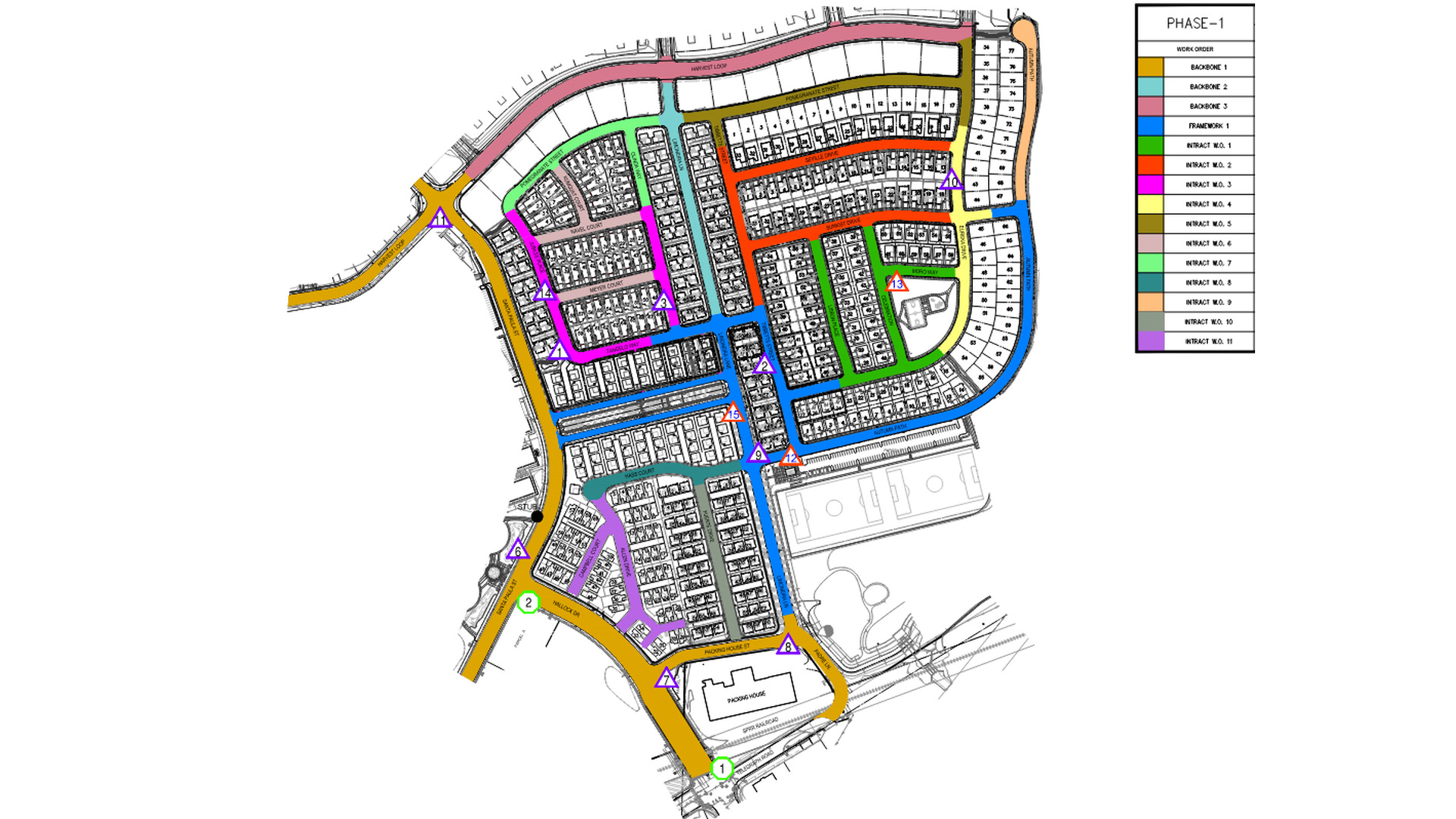
Utility Work Orders: Project Strategy and Schedule Impacts

What Is Dry Utility Consulting — and Why Every Southern California Project Needs It
Need Help Navigating SoCal’s Utility Maze?
Our team specializes in utility design coordination and consulting across Southern California — from Los Angeles and Orange County to the Inland Empire and Ventura County.
Contact Morrow Management to discuss your upcoming development and learn how we can keep your project connected and on schedule.