
Utility work orders can be complex, but this post provides a practical overview of how they are structured and managed. In California, the major Investor-Owned Utilities (IOUs) are generally governed by the California Public Utilities Commission (CPUC). The CPUC sets rules and tariffs that describe the specific nature of how each utility must operate within its own service territory. The rules and tariffs become the framework for how the utility’s planning and project management departments process utility work orders and designs.
The dry utility scope of a development project depends on several factors. These include existing facilities within the project area, required overhead distribution or transmission relocations, undergrounding requirements, and the type and size of development.
Utility companies organize these efforts into work orders.
Each utility work order covers a defined scope of work and has its own design, contract, and scheduling process, as defined by the utility. The utility treats each work order as a sub-project within a project. The types and number of utility work orders depend on the project scope. A project may require several different work orders, each covering a specific portion of the work.
TYPES OF UTILITY WORK ORDERS
-
- Facility Removals: If the project involves demolition or redevelopment, there may be existing services or idle utility facilities that are no longer needed. Each utility would have a separate work order for its removals. These are typically initiated early in the project to clear the way for future improvements.
- Facility Relocations: If existing active overhead or underground facilities impact or conflict with proposed improvements, they may need to be relocated. Relocations can range from relatively minor adjustments to major distribution or transmission projects. This process varies by utility and scope. For example, a different department handles electric transmission relocations than distribution, and they can have longer lead times and additional requirements. Gas and communication relocations have their own engineering and coordination processes. Large relocations require substantial lead time, so early coordination is often critical to remain on schedule.
- Electric Rule 20 / Undergrounding: Existing overhead electric facilities that need to be converted to underground facilities.
- Electric Rule 15 / Line Extension: Backbone or in-tract extension of electric facilities through the project. Depending on the number of units and construction phasing, a project may require multiple Rule 15 work orders.
- Electric Rule 16 / Service Extension: Service work order that extends service from the main utility line to a building’s service point. Depending on the number of Rule 15s and product phasing, multiple R16 work orders may be required.
- Electric Rule 15 / 16 Combo Commercial Service: Commercial, industrial, and multifamily projects may require a coordinated work order that accounts for both the mainline and service portion of the project.
- Gas: Rule 20 / 21: On a mixed-fuel project, the natural gas provider will require mainline (R20) and service extension (R21) work orders. The process is involved and includes design coordination, contracts, payments, and easements.
- Communications Mainline and Service Extensions: Telephone, CATV, and private Technology Conduit providers have their own mainline and service work orders. Requirements vary by provider and may include design coordination, service agreements, and easements.
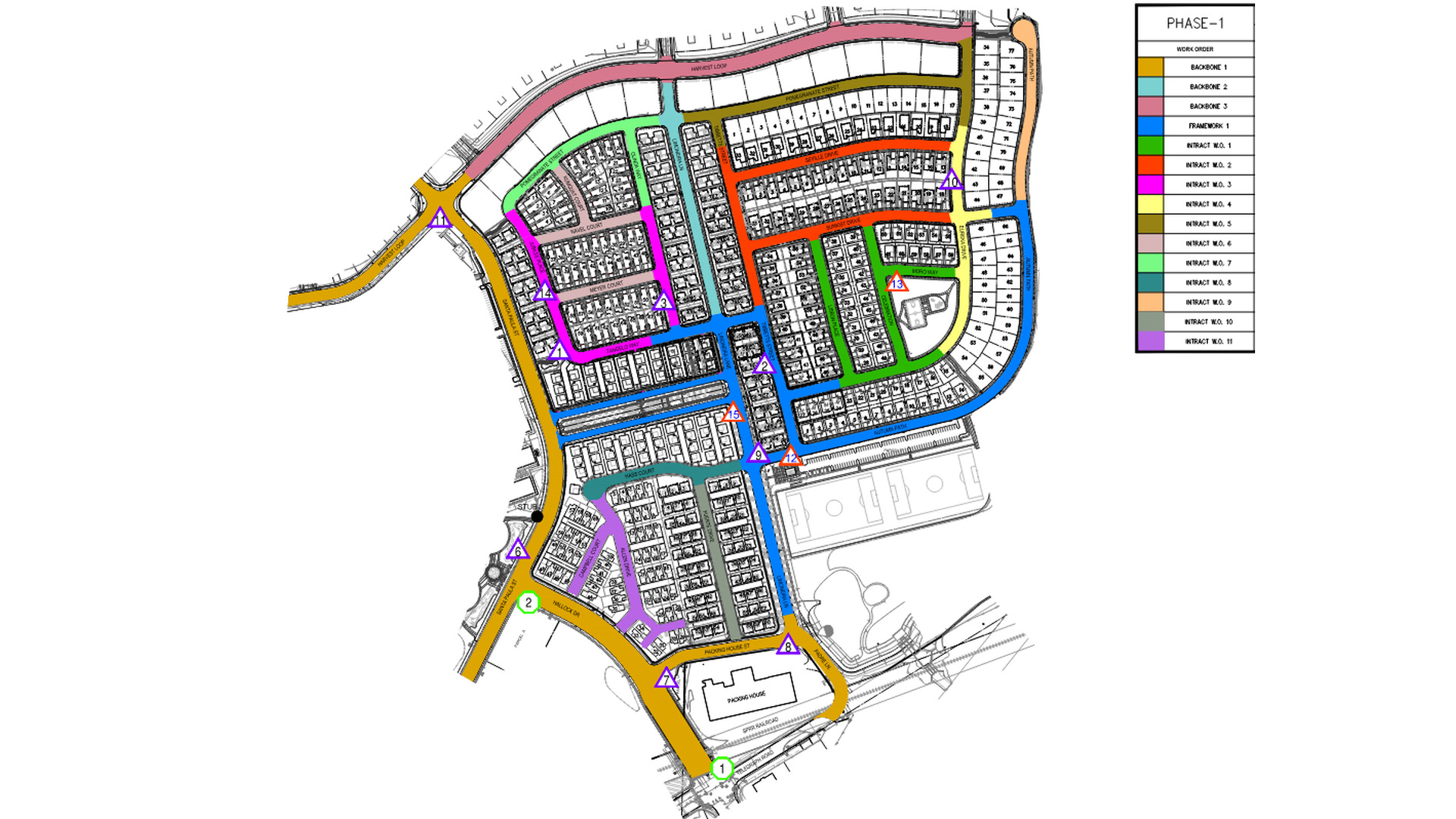
Work Order Strategy
A single development often involves numerous utility work orders, with different requirements and timeframes. Morrow Management helps developers plan early to identify required work. This early planning lets us track critical utility milestone dates that align with developer schedules and support overall project success.
A project’s success and schedule adherence depend on establishing utility work orders early in the project life cycle. Utility work order design sequencing, installation, utility fees or credits, and, ultimately, project energization depend on how the project was set up from the very first submittal.
Case Studies and Examples
- Sequenced Rule 20 Undergrounding feeding a Backbone, feeding distribution line extension (Rule 15) work orders. When a project requires multiple work order types, the electric utility will typically prescribe that the offsite or “source” work order makes significant design progress before the utility will accept application / submittal of the onsite work order. Fundamentally, this means that the onsite planning and design work cannot officially occur until the offsite or relocation design is approved. This could mean a significant delay in processing of the onsite dry utility construction documents if the sequenced design schedule is not captured early.
- Combo Rule 15/16 work orders. In the case of multifamily or commercial / industrial projects, there may be specific advantages to either separate or include the building service work orders into the mainline Rule 15 design.
- Service and Meters Included on Rule 15:
- Benefit: If services and meters are included, SCE will provide significant allowances in the form of fee credits on the contract, which normally offset the majority of the project fee cost to SCE for the utility portion of the electrical installation.
- Downside: The switchboard and electrical system must pass city building and safety clearance for SCE to initiate the scheduling window for the entire work order. This could delay energization in the final stages of project completion. Additionally, the site may require temporary power for construction.
- Services and Meters Separated from Rule 15:
- Benefit: The mainline primary cable and transformer installation can be scheduled in advance of the city electrical inspection clearance. This allows SCE to set transformers early in the site construction.
- Downside: Due to the SCE contract setup, the transformer cost (ROM $35,000-$100,000 depending on size) becomes a non-refundable sunk cost to the developer.
- Service and Meters Included on Rule 15:
As these examples illustrate, work-order structure and sequencing can impact scheduling, cost, and execution. Morrow Management helps clients evaluate utility requirements and determine the best approach for their project.
Key Takeaway
Utility work orders must be sequenced and strategized appropriately, following utility rules and tariffs for work order type, design intent, and application to the specific phase of the project.
Morrow Management is the process expert and has assisted hundreds of developments navigate the unique challenges of California's utility landscape.

Submitting to the Utility: Electric, Gas, and Communications

Halloween at Station Craft

Utility Backlogs Explained: Protecting Your Energization Date
